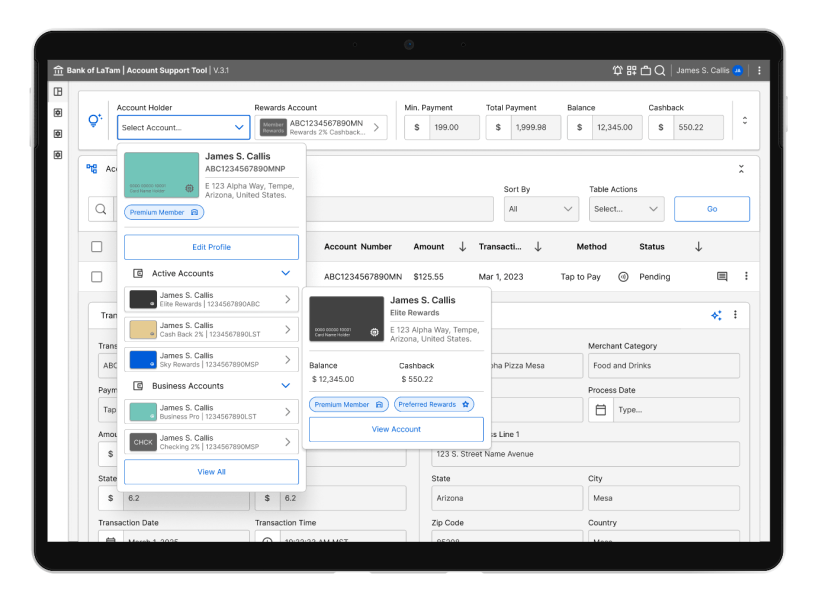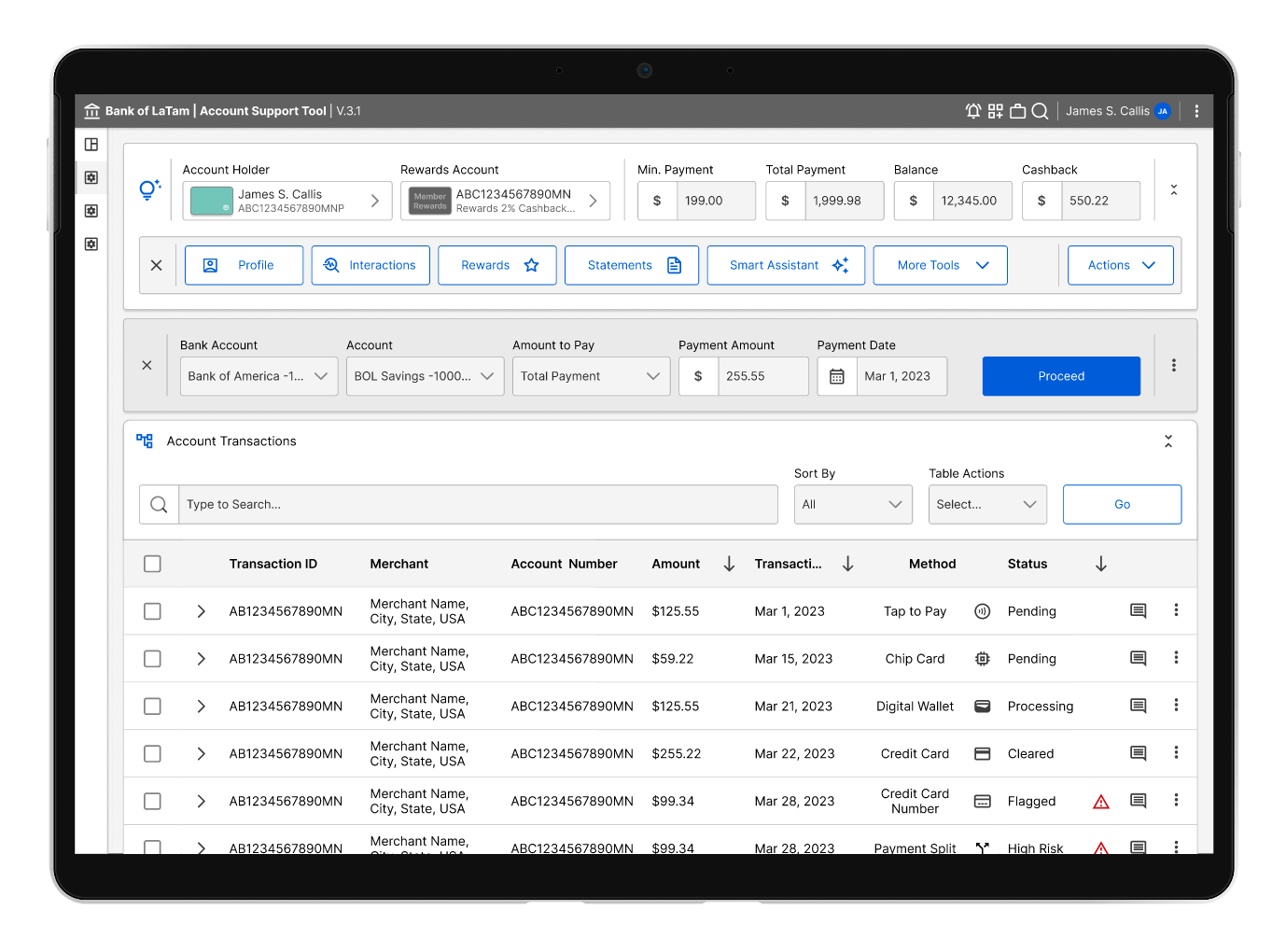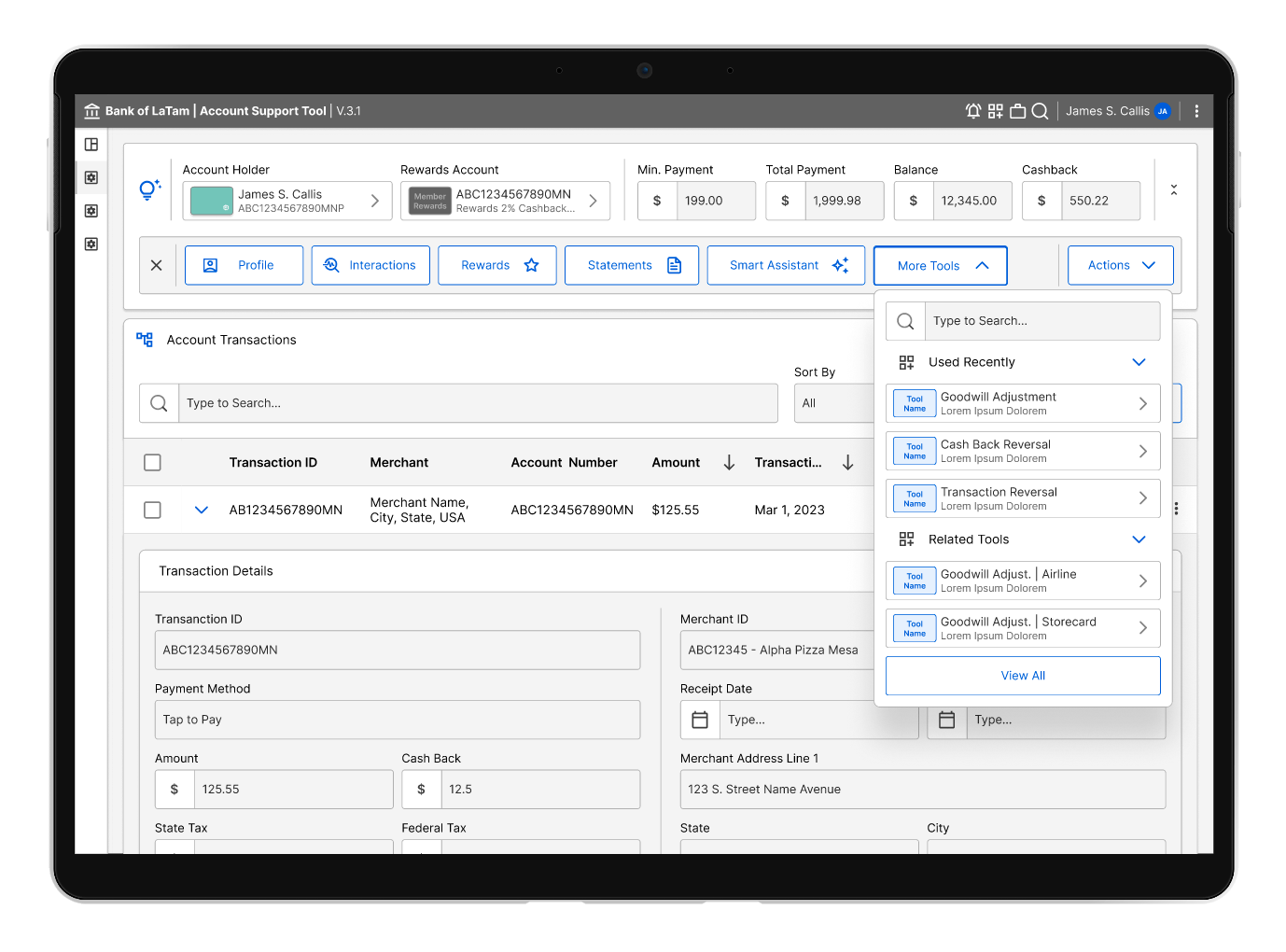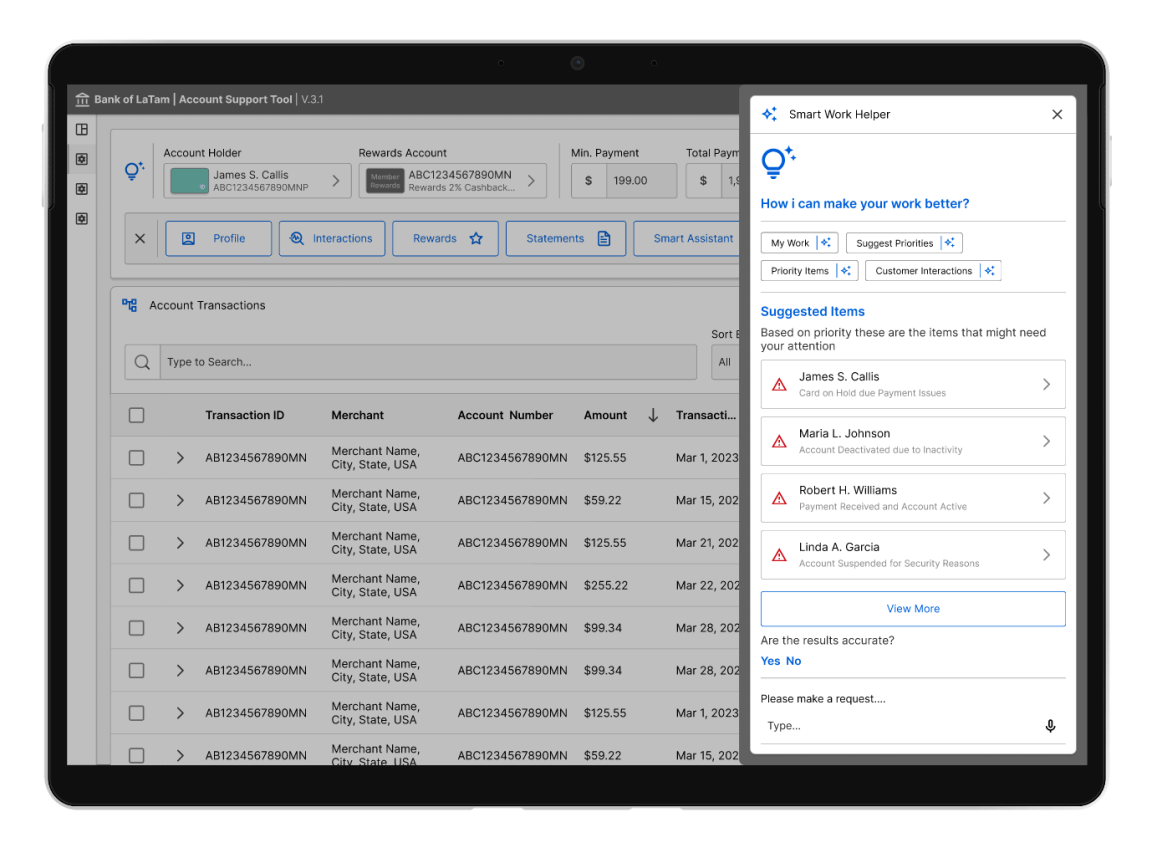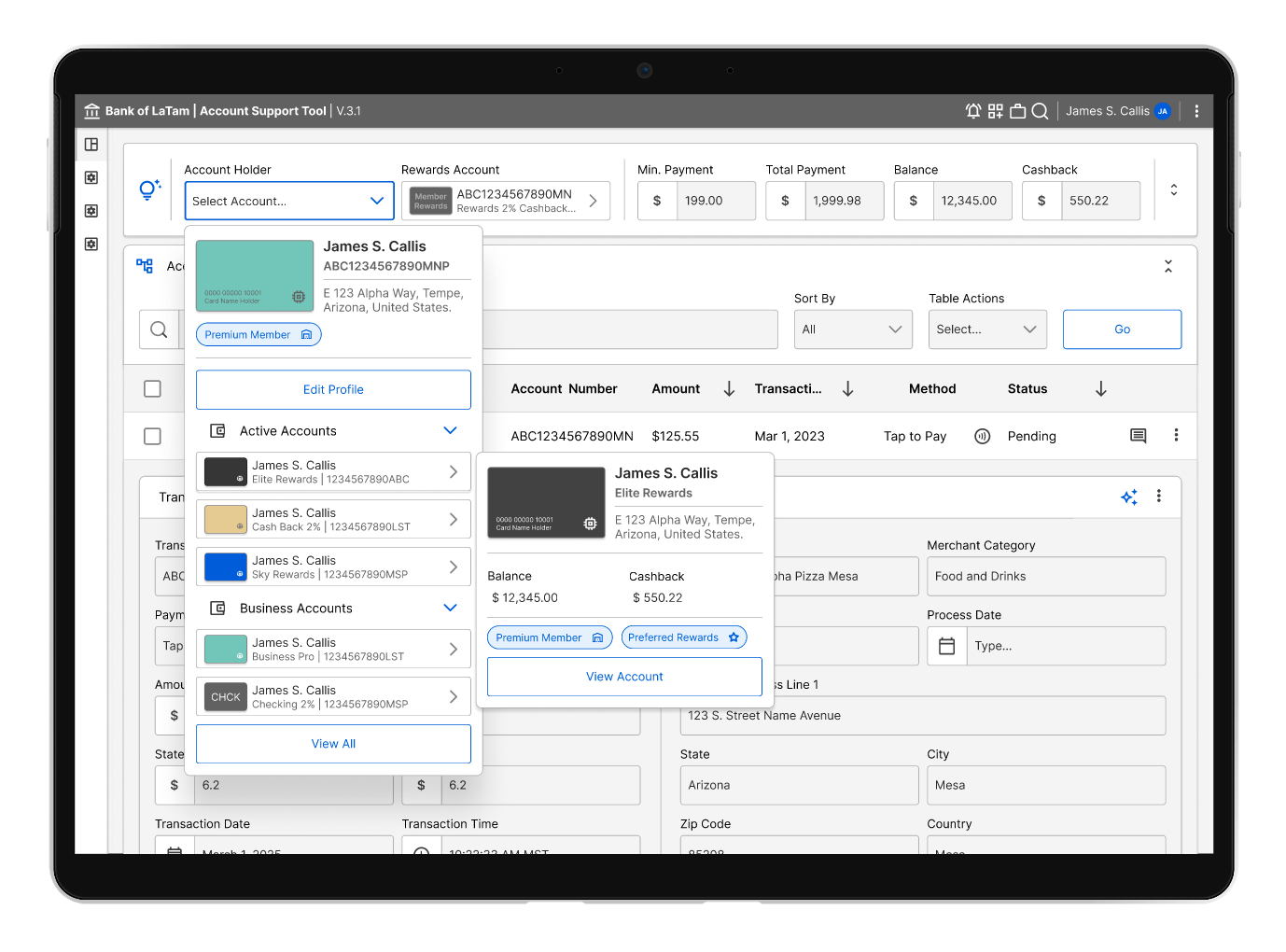
Led UX for the end-to-end migration of a global bank’s rewards support platform, collaborating across cross-functional, distributed teams of developers, product owners, and business stakeholders. Over a multi-month initiative, I designed detailed user personas, journey maps, and interactive prototypes that optimized more than 50 distinct user flows.
By grounding design decisions in user research and system analytics, I transformed legacy workflows into a streamlined, high-efficiency interface tailored for frontline support teams. The project launched on schedule, earning leadership recognition and significantly boosting operational efficiency and customer support outcomes.
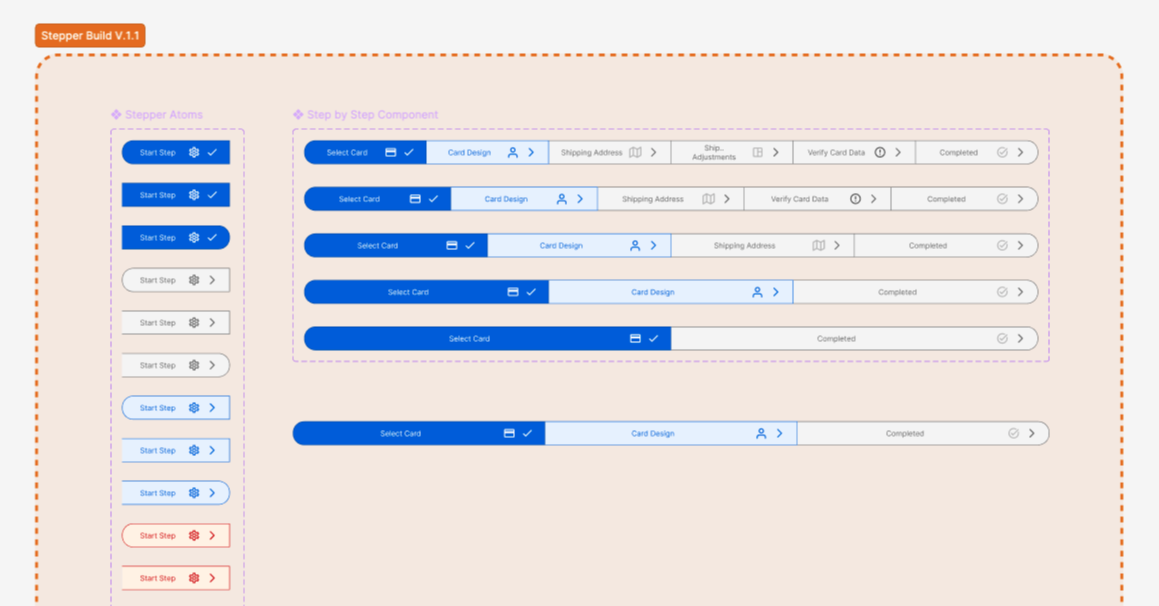
Despite a clear client vision, we faced an overwhelming volume of legacy applications and user journeys under tight time and budget constraints. To manage this scope, we prioritized core workflow optimization and aimed to minimize custom development by leveraging a pre-built React component library—an approach that required balancing design flexibility with technical constraints.
The client needed the new dashboard and tools deployed urgently. Their existing 30-year-old system suffered from severe security vulnerabilities and usability bottlenecks, making immediate retirement essential. Upgrading was critical to safeguard operations, meet modern compliance standards, and maintain exceptional service in a competitive market.
Mapping System Architecture
To establish a baseline, we mapped the system architecture and data pipelines feeding frontline Customer Service teams. We mapped end-to-end user journeys and application flows across every level of the ecosystem, ensuring consistent interaction patterns across all tools.
Our objective was to rebuild a high-performing tool suite capable of supporting demanding operational needs. Because bank customers expect seamless, top-tier service, we designed the internal tooling to empower frontline staff to meet those expectations efficiently.
Establishing this architectural foundation early proved essential—it created a shared source of truth that guided stakeholder alignment, streamlined technical handoffs for developers, and accelerated high-fidelity wire framing. Through asynchronous reviews and interactive workshops, we maintained an efficient, highly collaborative process across the entire product lifecycle.
Working closely with the client, we dedicated significant effort to mapping and refining core user journeys before jumping into layout design. Establishing this architectural foundation early proved essential—it created a shared source of truth that guided stakeholder alignment, streamlined technical handoffs for developers, and accelerated high-fidelity wireframing. Through asynchronous reviews and interactive workshops, we maintained an efficient, highly collaborative process across the entire product lifecycle.
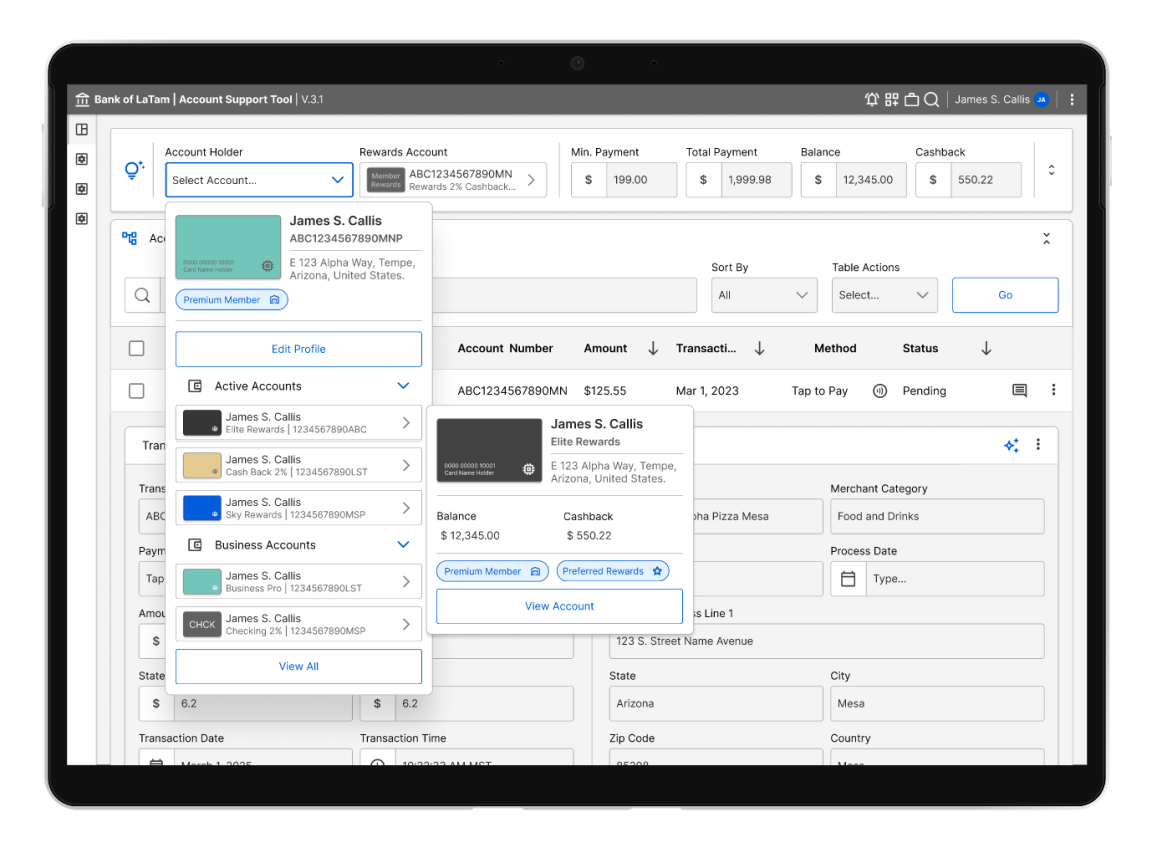
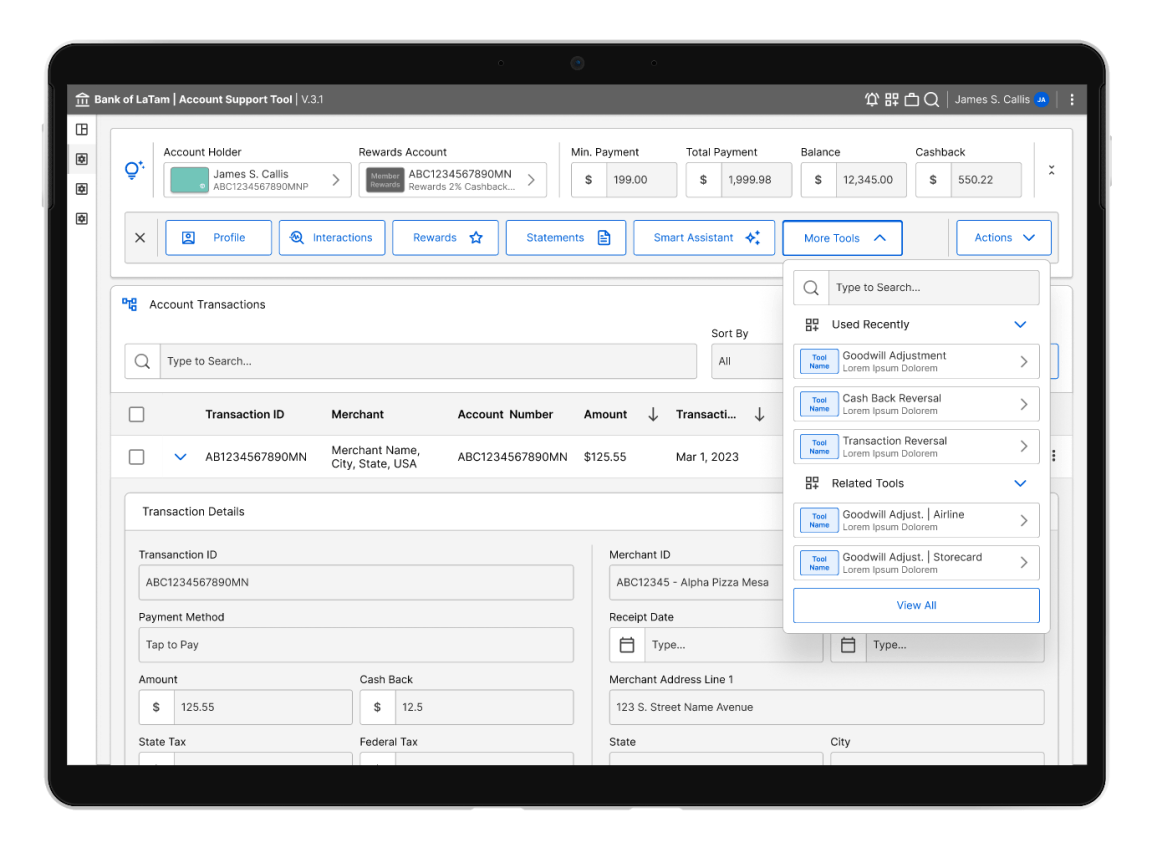
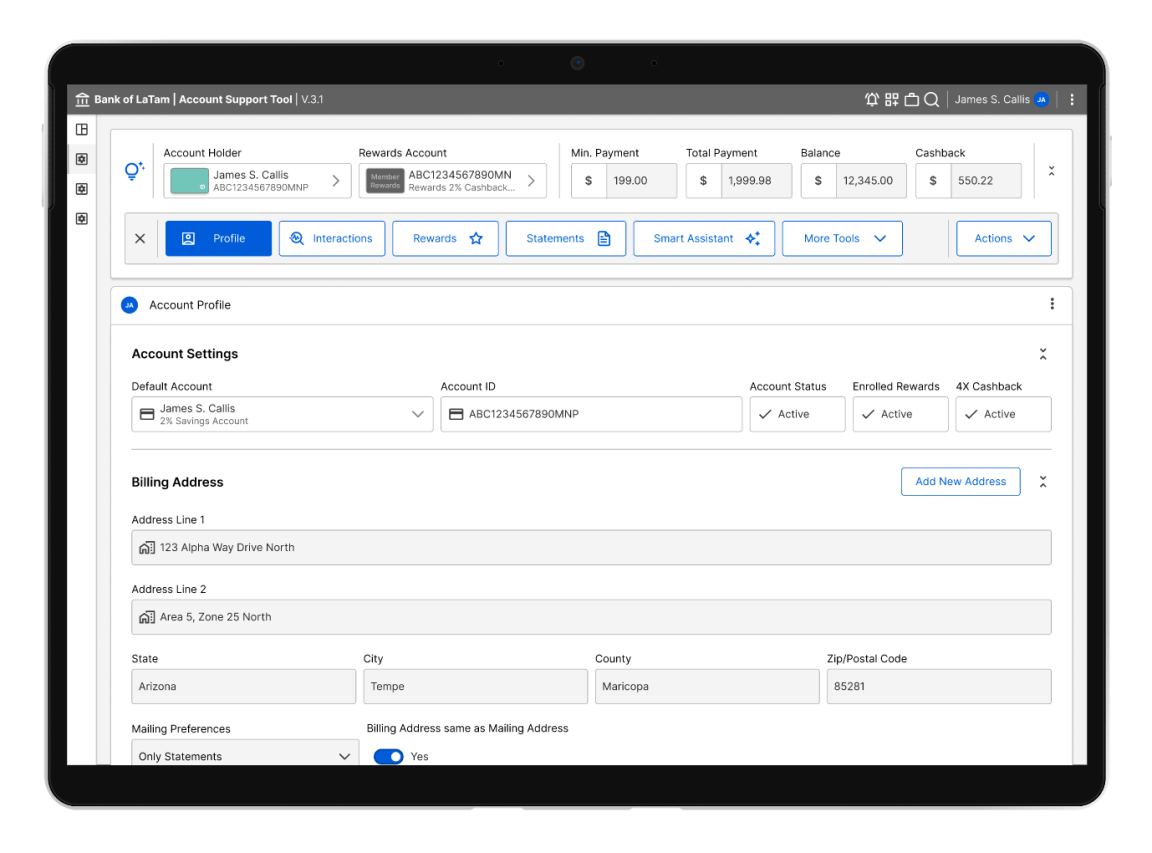
We meticulously tailored each interface to surface data based on continuous user feedback.
By defining the exact feature set required for every scenario, we enabled frontline support teams to retrieve account data rapidly and resolve customer inquiries with minimal friction. Resolving this critical operational bottleneck earned praise from leadership, yielding an enterprise platform that now seamlessly supports millions of daily active customers.
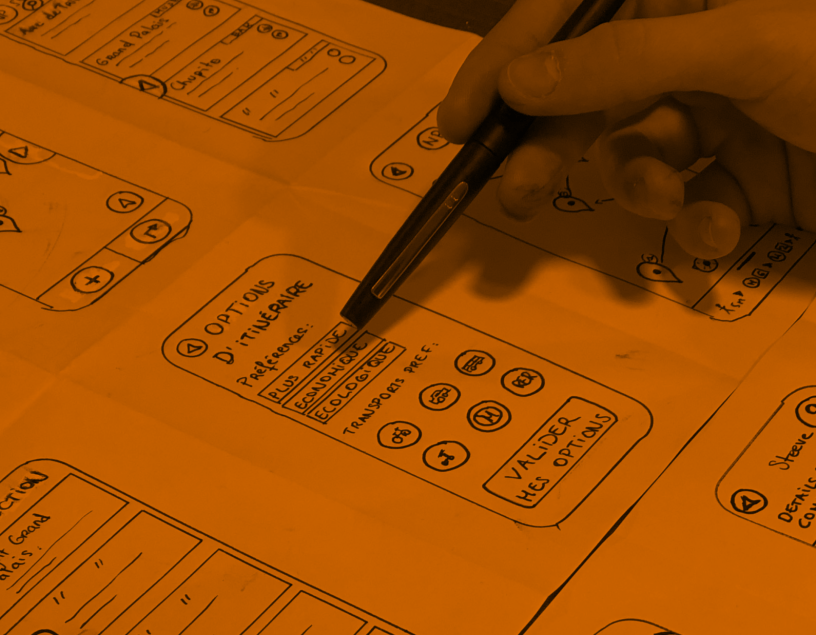
Our Figma prototypes served as both high-fidelity interaction models and living design documentation for engineering teams. We mapped comprehensive user paths for edge cases and core workflows alike.
Continuous, transparent communication across developer and product teams ensured technical limitations were addressed early, safeguarding feature fidelity through final delivery.
Elevating Frontline Support & Customer Experience
The interactive prototypes served as both high-fidelity interaction specs and definitive production documentation for the engineering teams. By mapping complete user journeys—including edge cases and complex workflows—we eliminated ambiguity during implementation. Through continuous, proactive communication across teams, we identified technical constraints early, ensured complete feature parity, and delivered a seamless platform that directly elevated the quality of service for millions of end customers.
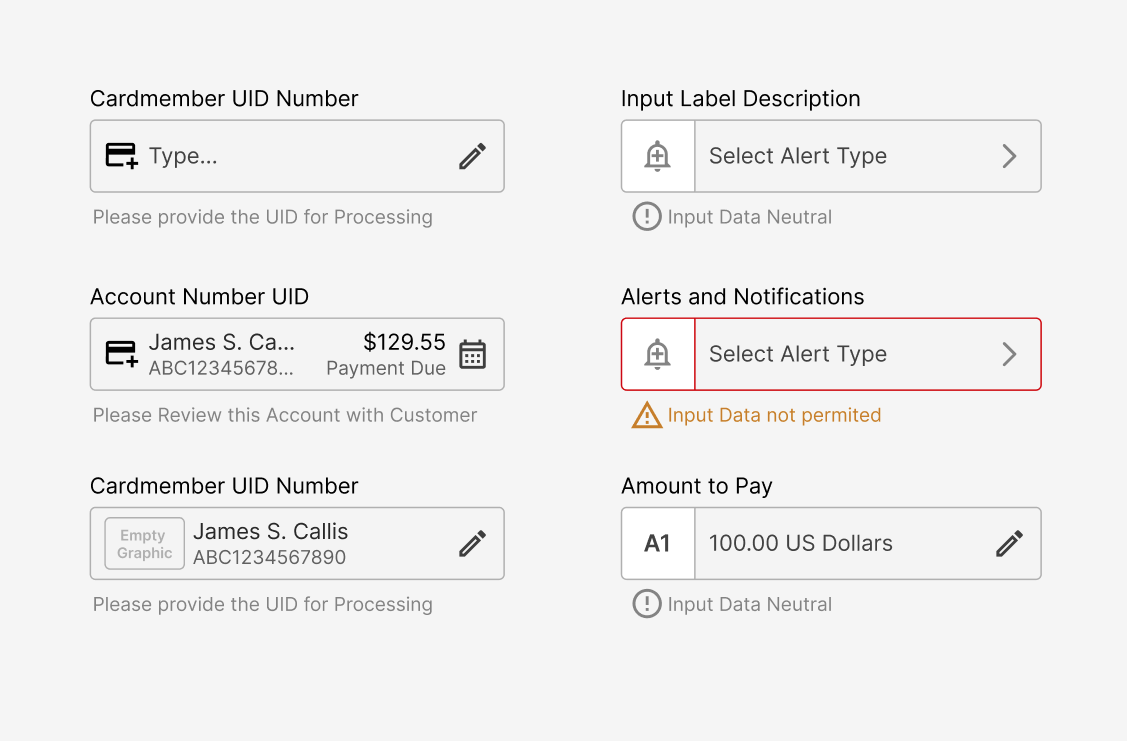
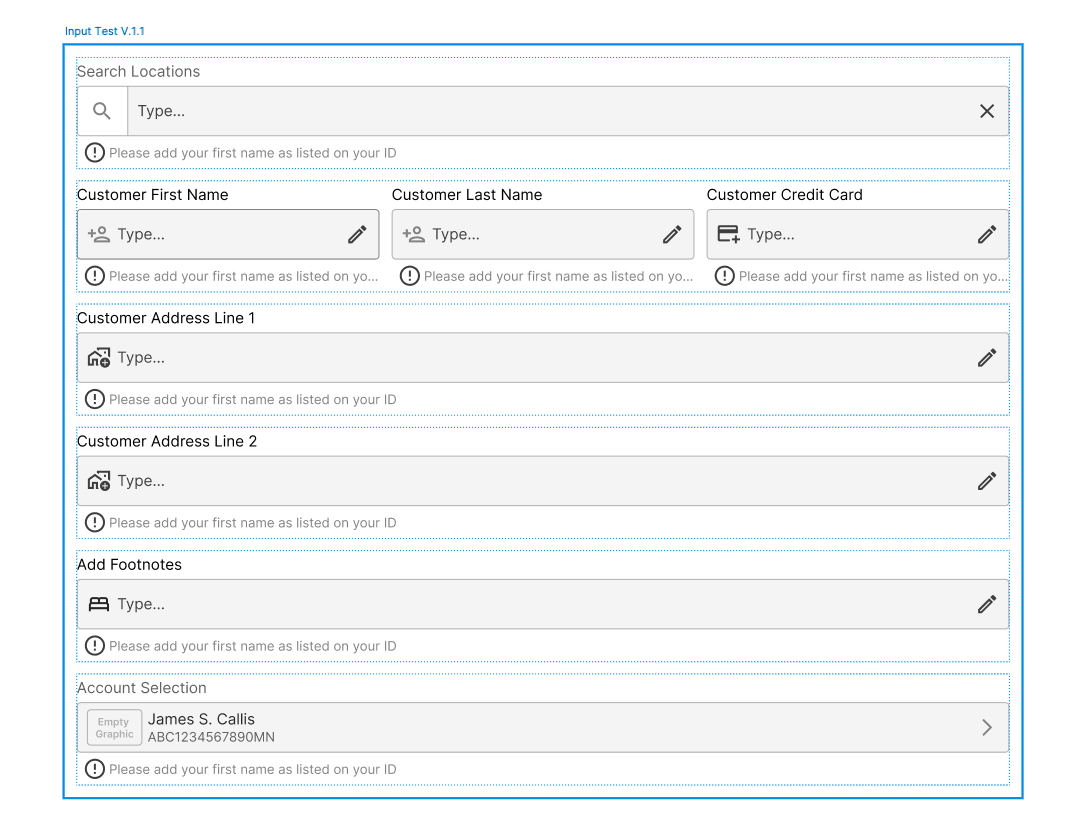
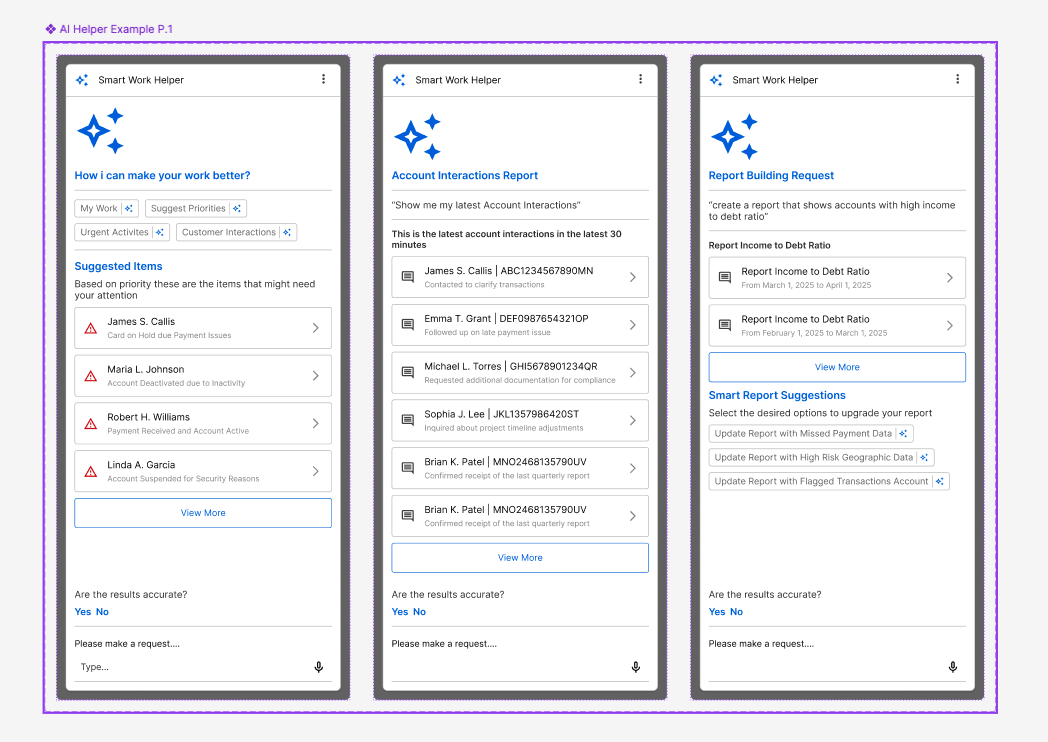
The screens used on this Case Study are variants not used on the actual prototype due to NDA agreements and Copyright, the Design System Library and the Screens are based on a generic Bootstrap Library that mirror some of the functionalities of the actual delivered prototype but not all of them, and most features are obscured and modified on purpose to reflect features used on the Case Study.
Website Software